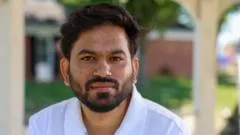
In under three months a 30-year-old Boston graduate turned a chief justice's remark into a national movement that toppled an education minister and now campaigns for better rural schools.
How did the cockroach protests begin and who is Abhijeet Dipke?
Abhijeet Dipke, who recently completed a master's in public relations at Boston University, wrote the post on 16 May while playing a video game. The message read: "What if all cockroaches come together?" It responded to Chief Justice Surya Kant's comparison of some jobless young people to cockroaches. Kant later clarified that he meant only those using fake degrees, yet the remark had already ignited widespread anger among students and graduates across India.
Dipke had worked for three years with the Aam Aadmi Party before moving to the United States. The post drew tens of thousands of replies and led him to launch the Cockroach Janta Party with former colleagues and activists. The satirical name references both the judicial comment and Prime Minister Narendra Modi's Bharatiya Janata Party. Government supporters trolled the campaign heavily; its website and X account were briefly taken down in India. Dipke received a notice citing Section 69A of the Information Technology Act, which permits blocking content in the interest of sovereignty, integrity or security of the state. The ministry did not respond to BBC queries, but officials told other outlets the block addressed national security concerns.
Dipke decided to return to India after being labelled a national security threat. He said the label hurt because a government should stand by its citizens abroad. A lawyer advised against returning, warning of possible detention under the National Security Act. His mother pleaded with him not to come back. Despite sleepless nights and family fears, Dipke chose to return to show he was not a threat and to avoid betraying followers who had joined the movement. In his hometown of Chhatrapati Sambhajinagar he is now routinely surrounded by people wanting photographs or handshakes, an attention he describes as overwhelming after years spent largely alone watching documentaries in Boston. He called the period a rollercoaster ride and said two or three months earlier nobody knew him.
Why did the exam paper leak become the central issue?
Shortly after the campaign began, the national medical entrance exam was scrapped following a question-paper leak. More than 20 students were reported to have taken their own lives in the aftermath. Dipke said he spoke daily with at least a hundred followers, most of whom raised the scandal. The issue cut across religious and caste lines because it affected middle-class families seeking professional education for their children. A government report shows graduate unemployment at 29.1 percent, nine times higher than for those who never attended school, and only just over 8 percent of graduates find jobs matching their skills. The protests started at Delhi's Jantar Mantar on 6 June with only hundreds present. Turnout grew after activist Sonam Wangchuk's 26-day hunger strike. On 20 July, when protesters tried to march toward parliament, police and paramilitary forces used tear gas, batons and pellet guns. Dozens of protesters were injured; the government said dozens of police personnel were also wounded. Images of the clashes triggered a surge of support, with thousands arriving at the site and demonstrations spreading to other cities. Opposition parties rallied behind the Cockroach Janta Party, though Dipke said he had not confronted their leaders about earlier inaction.
What led to Education Minister Dharmendra Pradhan's resignation?
Prime Minister Modi released videos on two successive nights promising tough action against those involved in exam leaks. Protesters, however, demanded the resignation of Education Minister Dharmendra Pradhan. On 25 July, Pradhan stepped down, stating the move would ensure anti-national elements did not exploit the situation. The speed surprised observers because Pradhan had played a central role in recent state elections. The government had previously reversed course on the farm laws after sustained protests, yet this climbdown came far more quickly against a movement led by previously unknown organisers. Dipke was on stage at the protest site when the news arrived. He dropped to his knees, sprang up, punched his fist into the air and shouted that the movement had succeeded. The resignation marked a rapid government reversal after more than twelve years in power and amid growing anti-incumbency.
What challenges does the Cockroach Janta Party face now?
The group has shifted focus to conditions in rural government schools. During a visit to a school in Maharashtra's Hingoli district, Dipke saw no toilet for female students and expired food packets used for midday meals. At another school, cracks ran through floors, walls and ceilings. The campaign has gained some traction but remains ad-hoc and functions more as a loose pressure group than a formal party. Dipke has described the goal as a cultural transformation in which citizens understand rights and duties and hold any government accountable. Critics have questioned whether the movement avoids contentious issues affecting Muslims and lower-caste Indians to maintain broad Hindu support. Dipke rejects this, noting that crowds at Jantar Mantar chanted both "Jai Bhim" and "Hindu-Muslim politics will not work anymore." The larger test is whether the Cockroach Janta Party can convert the burst of anger over education failures into lasting campaigns. For Dipke, a self-described introvert, the challenge is also personal: he must sustain public work while keeping the hope placed in the movement alive.
Frequently asked questions
Who founded the Cockroach Janta Party?
Abhijeet Dipke, a 30-year-old who studied in Boston, founded the group after a chief justice's remark about cockroaches. He previously worked with the Aam Aadmi Party.
What caused the protests to grow rapidly?
A national medical exam paper leak triggered the surge. More than 20 students died by suicide afterward, and images of police using force against demonstrators drew wider support.
Did the government block the group's online accounts?
Yes. The Cockroach Janta Party website and X account were withheld under Section 69A of the Information Technology Act on national security grounds, according to notices received by Dipke.
Why did Dharmendra Pradhan resign?
Pradhan resigned on 25 July after weeks of protests demanding his departure over the exam scandal. He stated the move would prevent anti-national elements from exploiting the situation.
What is the Cockroach Janta Party doing now?
The group campaigns for better conditions in rural government schools, highlighting missing toilets, expired food supplies and structural damage in facilities across Maharashtra.
Key takeaways
- Abhijeet Dipke started the protests with a single social media post on 16 May.
- Graduate unemployment in India stands at 29.1 percent according to government figures.
- The exam paper leak led to more than 20 student suicides before protests intensified.
- Education Minister Dharmendra Pradhan resigned on 25 July.
- The movement now focuses on rural school infrastructure and student dignity.
- Dipke returned from the United States despite legal warnings and family concerns.
Outlook for the movement
The Cockroach Janta Party captured national attention through student anger over education failures. Sustaining that attention requires turning protest energy into consistent campaigns on school conditions and accountability. Dipke, an admitted introvert, continues public work while the group tests whether it can evolve beyond a single-issue pressure group into a lasting force for policy change.