For 25 years the Office of Chief Medical Examiner has used evolving DNA methods to name victims of the 2001 attacks. The newest technique has produced the 1,654th identification and offers renewed hope for families of the more than 1,000 still-unidentified dead.
How many 9/11 victims at the World Trade Center remain unidentified?
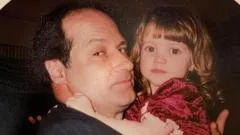
More than 1,000 people killed in the New York attacks have not been identified. The medical examiner’s office has recovered remains from 2,753 victims and has used fingerprints, dental records and repeated rounds of DNA testing to name 1,654 individuals. The most recent identification, announced last month, was the first achieved through forensic investigative genetic genealogy, or FIGG. Officials continue to store sealed remains in conditions that preserve DNA for future testing. Juliette Scauso’s father Dennis, an FDNY hazmat firefighter who switched shifts for overtime on 11 September 2001, is among those still missing. His mangled helmet with badge number was recovered months later, but his remains were never found. Scauso, who was four when her father died, has spent her entire life knowing he perished yet never recovered. The family was told he was likely inside the South Tower when it fell. Dennis Scauso is one of more than 1,000 victims from the New York attacks whose remains have not yielded an identification despite two and a half decades of effort.
What is forensic investigative genetic genealogy and how does it differ from earlier DNA methods?
FIGG relies on whole genome sequencing to read an individual’s complete genetic code from small or degraded bone fragments. Earlier DNA work focused on short tandem repeats that required larger or better-preserved samples. The expanded data set allows analysts to search for matches among distant relatives rather than only immediate family members. Once a potential match appears, New York Police Department investigators locate closer relatives for confirmatory testing. The technique has already produced the 1,654th identification and is expected to be applied to additional remains stored since 2001. Last year the office also named three more victims through conventional DNA work: Ryan Fitzgerald, a 26-year-old currency trader; Barbara Keating, a 72-year-old passenger on American Airlines Flight 11; and a woman whose family asked that her identity remain private. Angela Soler, director of forensic anthropology, said the new method gives real promise for testing more remains in the future. She noted that the approach opens the possibility of testing additional fragments that previously yielded insufficient data.
Why have identifications continued for 25 years?
Jet-fuel fires and the collapse of the towers damaged many remains, leaving only partial samples. Some first responders wore borrowed gear, which complicated initial visual or clothing-based checks. As laboratory methods improved, the medical examiner’s office retested the same fragments with each new technology. DNA matches now account for 1,495 identifications, either alone or in combination with other evidence. The office receives weekly calls from families still seeking information. Remains were packaged and sealed soon after the attacks to preserve DNA for later testing. Soler noted that the World Trade Center effort is one of the most complex identification projects ever undertaken, with 60 percent of the 2,753 victims now named. The sheer scale of remains, combined with the extreme conditions at the site, meant conventional methods reached their limits quickly, forcing repeated re-examination as technology advanced.
What choices do families face when remains are identified?
Some families request that identified remains stay at the repository built into the bedrock at the World Trade Center site. Others accept custody for private burial. A reflection room next to the repository allows private mourning. A minority of families have asked not to be notified, citing the emotional cost of reopening long-closed chapters. Juliette Scauso, whose father Dennis died in the South Tower, has stated that an identification would not alter the reality of his death and could disturb the way her family has learned to grieve. She knows others who received recent calls and finds the prospect frightening after 25 years. Soler has seen both relief and sadness when families are notified; confirmation closes one chapter but can reopen wounds. Some families choose to leave remains at the repository because that is where their loved one was in the final moments. The repository can be accessed only by medical examiner staff, preserving the site’s sanctity for those who wish their relative to remain there.
What limits exist on future identifications?
Investigators acknowledge that some victims may have left no recoverable remains. The medical examiner’s office has no plans to close the case while families continue to seek answers. Current colleagues who worked at the site on 11 September 2001 treat the work as personal. The repository remains accessible only to staff, and testing protocols will continue as long as suitable technology and family reference samples are available. Soler said workers arrived at Ground Zero after the planes hit and were present when the towers collapsed, making the effort deeply personal. As long as families are looking for answers, the office will keep searching. It remains unsettled whether every victim left enough material for even the newest methods to succeed.
Frequently asked questions
How many people died at the World Trade Center on 11 September 2001?
Official records list 2,753 victims at the site. This figure includes office workers, visitors and first responders but excludes those on the hijacked planes.
Has every victim at the Pentagon and Shanksville been identified?
All 40 victims aboard United Airlines Flight 93 were identified. Five of the 184 people killed at the Pentagon have not been identified.
Can families decline notification of a new identification?
Yes. The medical examiner’s office respects requests from families who do not wish to receive updates because confirmation may be too painful.
Where are the unidentified remains stored?
They are kept in a secure repository built into the bedrock at the World Trade Center site. Access is limited to medical examiner staff.
Will testing continue indefinitely?
The office has stated that it will keep retesting remains with any new technology that becomes available, provided families are still seeking answers.
Key takeaways
- 1,654 of 2,753 World Trade Center victims have been identified as of September 2026.
- Forensic investigative genetic genealogy produced the most recent identification by matching distant relatives.
- DNA technology alone has contributed to 1,495 identifications since 2001.
- Some families choose to leave remains at the World Trade Center repository rather than accept custody.
- The medical examiner’s office will continue testing while families request information.
Outlook for remaining identifications
Progress now depends on the pace at which FIGG can be applied to the stored collection and on the willingness of additional family members to provide reference samples. Each new identification closes one case while reminding others that their own wait continues. The medical examiner’s office treats the effort as open-ended, guided by the families who still call each week.